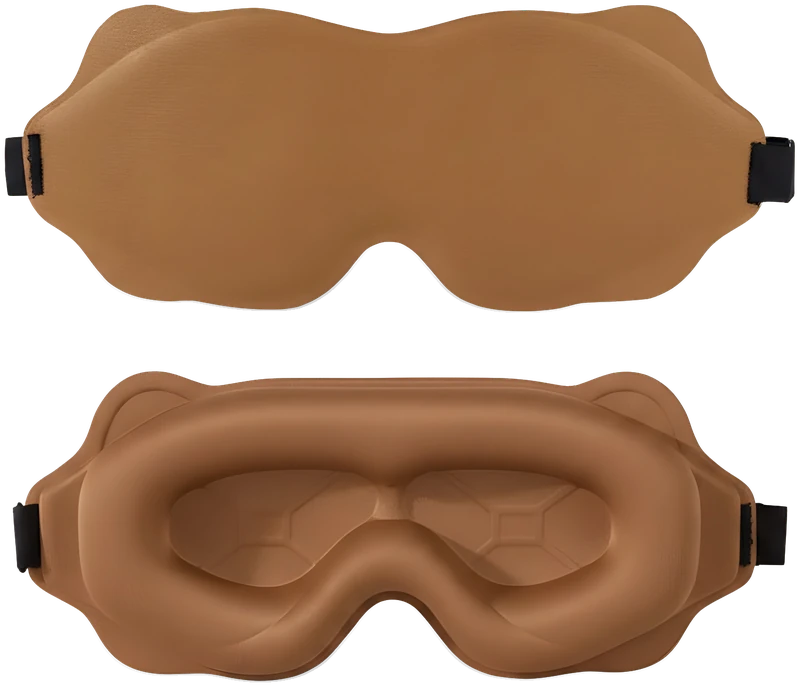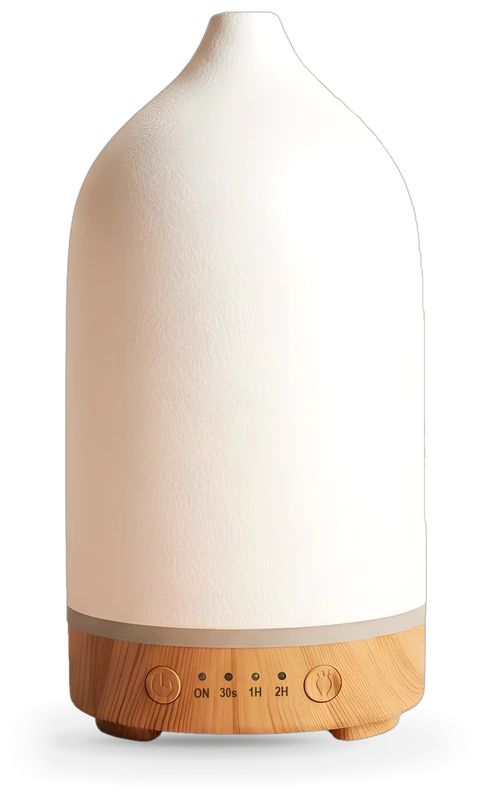

Darkness, temperature and a repeated cue are what change a night, roughly in that order. A sleep mask blocks the light curtains miss and works on the first night. Scent does not sedate anyone, but a smell you repeat every evening becomes a signal your body learns to read as the end of the day.
Every guide in this section
-
 Bedroom temperature and humidity for sleepWhat temperature and humidity should a bedroom be for sleep, and does adding moisture help or hurt?→
 -
 Do sleep masks actually work?Does wearing a sleep mask actually improve sleep, and how much of the research applies at home?→
 -
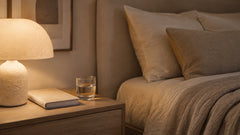 Essential oils for sleep, and how far the evidence goesWhich essential oils help with sleep, and how much do they actually do?→
 -
 How to make a bedroom dark enough to sleep inHow dark does a bedroom need to be, and what is the cheapest way to get there?→

Questions people ask next
Does lavender actually help you sleep?
Modestly, and mostly on questionnaires. Systematic reviews of inhaled lavender in adults report a small-to-moderate improvement in self-reported sleep quality — around a standardized mean difference of −0.56 in a 2025 meta-analysis — while flagging the source trials as low quality. Nothing shows lavender sedates anyone. It works best as a repeated cue, not as a treatment.
Should I run a diffuser all night?
You do not need to. The nose stops registering a constant scent within about twenty minutes, so an all-night run mostly means refilling the tank more often. Half an hour before bed, or a two-hour timer, does the same job.
Is a sleep mask better than blackout curtains?
For most people yes, on cost and on coverage. Curtains miss the charger LED, the hallway strip and a partner's screen. A mask also travels. Curtains win only if you genuinely cannot stand anything on your face.
Can a sleep mask cause wrinkles or dry eyes?
A flat mask pressed against the eyelid all night can crease skin and rub lashes. That is the specific problem a contoured shell is built to avoid: the mask rests on the brow and cheekbone, and nothing touches the eye itself.
What is the single first thing to change?
Light. It is the cheapest of the three levers, the fastest to act, and the only one where you will notice a difference the first night.
Where these numbers come from
- ASPCA Animal Poison Control — list of essential oils known to cause poisoning in cats, including citrus, pine, ylang ylang, peppermint, cinnamon, clove, eucalyptus and tea tree
- The Sleep-Enhancing Effect of Lavender Essential Oil in Adults, systematic review and meta-analysis (PubMed 40600743) — pooled SMD −0.56 on self-reported sleep quality
- Systematic literature review and meta-analysis of aroma inhalation therapy on sleep problems (PMC7939222) — reviewers' own assessment of trial quality as low and highly heterogeneous
- Weralis catalogue — 200 ml tank and a timer of up to two hours on the wood-grain diffuser