
Use less and place it better. Three to five drops of a single note is a full room in an ultrasonic diffuser, and the nose stops registering a constant scent within about twenty minutes, so short runs beat all-day ones. A room smells expensive when the scent is faint and consistent, not when it is strong.
Every guide in this section
-
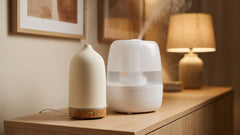 Diffuser or humidifier: which one do you actually need?What is the difference between an essential oil diffuser and a humidifier?→
 -
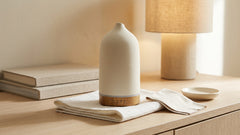 How to clean an ultrasonic diffuser, and how oftenHow often should an ultrasonic diffuser be cleaned, and what should be used to clean it?→
 -
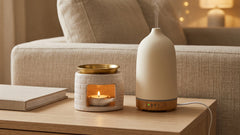 Oil warmer or diffuser: flame or switchWhat is the difference between a tealight oil warmer and an electric diffuser?→
Questions people ask next
How many drops of essential oil does a room need?
Three to five in an ultrasonic diffuser, two or three in a tealight warmer. If people mention the smell before they mention anything else in the room, it is too much.
Why can I not smell my own diffuser after a while?
Olfactory adaptation. The nose stops registering a constant scent within roughly twenty minutes, which is exactly why people over-pour. Rotating between two or three notes keeps them noticeable at a lower dose.
What is the difference between a diffuser and a humidifier?
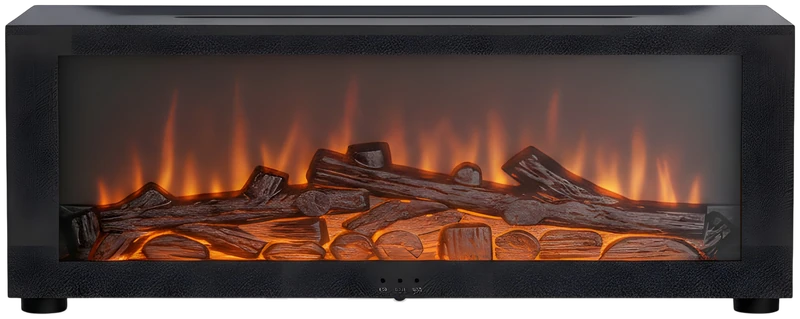
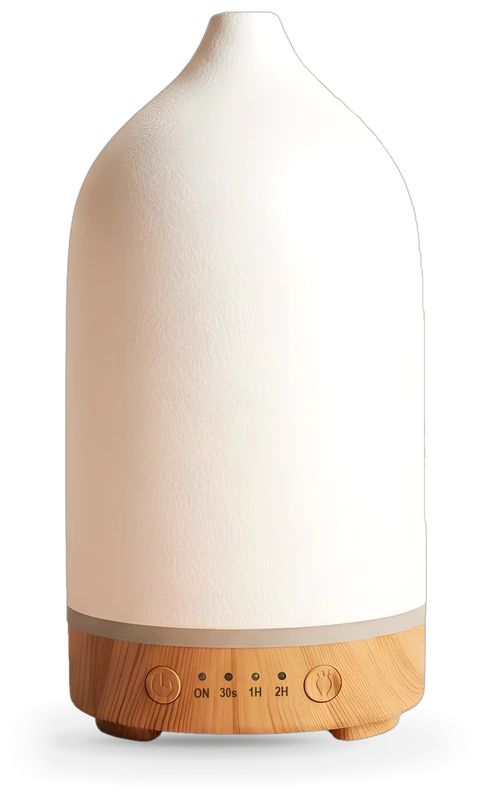
A diffuser is built to carry scent, a humidifier to add water to the air. Ultrasonic devices do both to a degree — the Flame Mist adds a flame-effect light, a remote and a timer, the wood-grain diffuser is the plain one with the larger tank. Neither replaces a whole-home humidifier, and neither is sized for an open-plan floor.
Where should I put a diffuser?
Off the floor, out of a draft, not right beside a seat, and with some space around it. Pushed against a wall it leaves a damp patch and a strong pocket of scent instead of an evenly scented room.
Can one device scent a whole house?
No. A tabletop diffuser scents the room it stands in. Open-plan space needs a second device — which is the reason the Home set pairs the two.
Where these numbers come from
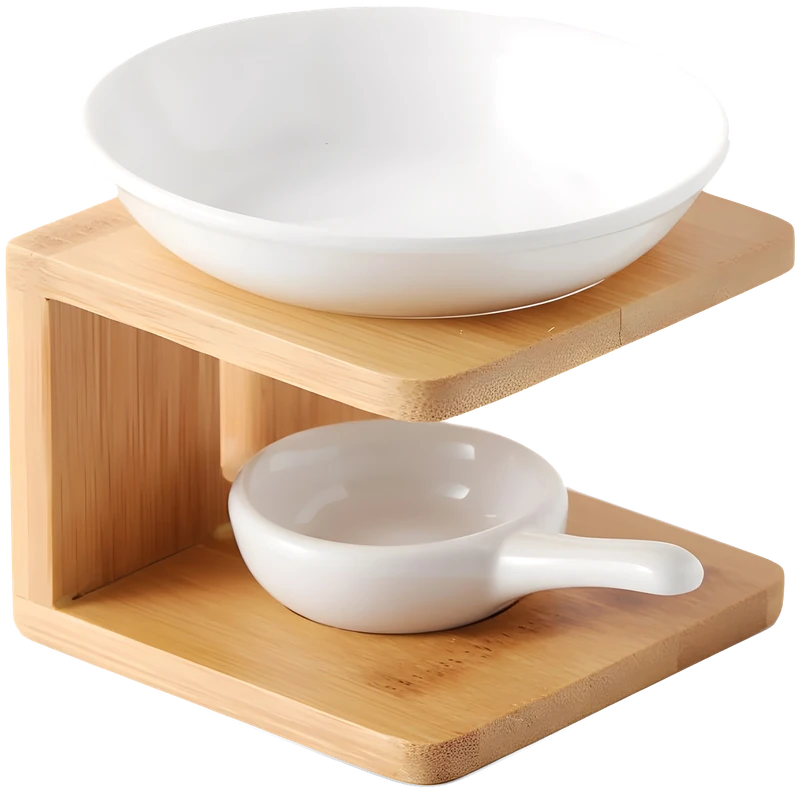
- Weralis catalogue — 200 ml tank and a timer of up to two hours on the wood-grain diffuser; 150 ml tank, timer and remote on the Flame Mist humidifier; two porcelain bowls on the wooden warmer
- ASPCA Animal Poison Control — passive versus active diffusers, and the oils to avoid in homes with cats
- Supplier specification sheets held for each device, used for tank volume and run time rather than marketing copy