
Darker than feels necessary. Melatonin suppression begins at light levels far below what reads as a dark room, and exposure to ordinary room light during sleep suppresses it by more than half in most people. Deal with the sources in order of cost: device LEDs, then curtain gaps, then the window itself — or skip all three with a mask.
Questions people ask next
How dark should a bedroom be for sleep?
Darker than it needs to feel. Melatonin suppression begins around 1.5 melanopic lux — a level most people would call dark — and reaches half its maximum effect near 21 lux. Ordinary room light during sleep suppresses melatonin by more than half in 85 percent of trials.
Does a small LED really affect sleep?
A single standby LED is small, but the threshold is small too, and the effect is on melatonin rather than on whether you feel sleepy. Taping over the LEDs in a bedroom is free, takes five minutes, and removes more light than most curtain upgrades.
Do blackout curtains work?
The fabric works; the installation usually does not. Most light enters at the sides, so a blackout curtain hung inside the window recess leaks around its edges. Hang it wide and outside the recess, or accept a mask as the more reliable fix.
Is a sleep mask as good as a dark room?
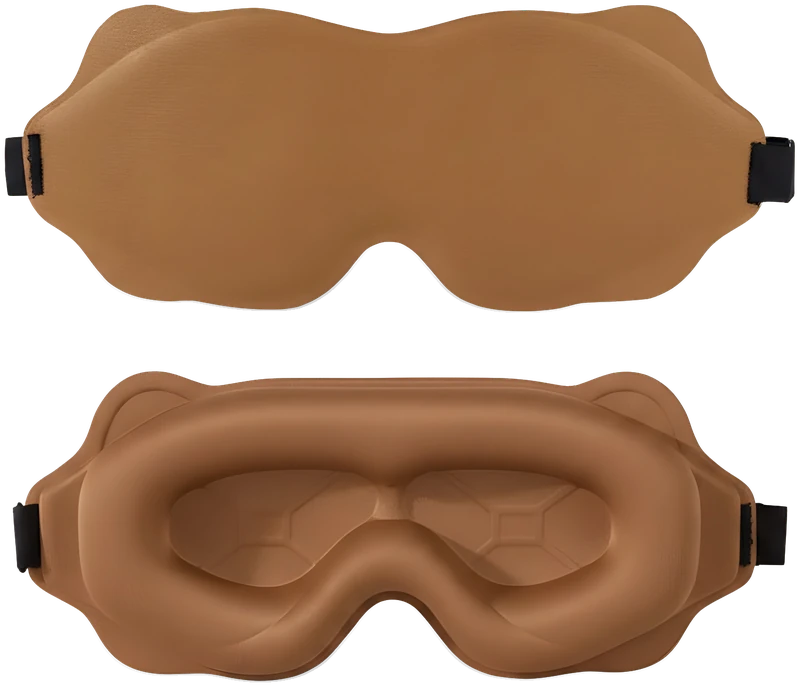
For the eye, better — it blocks light the room cannot, including a partner's lamp and a streetlight you cannot move. It works on the first night and travels. It does nothing for the rest of the room, which is why it is a fix rather than a renovation.
Can I leave a diffuser light on all night?
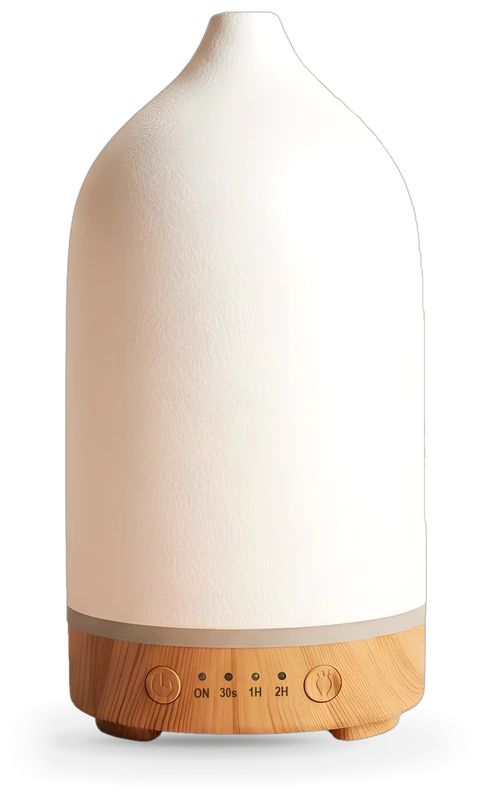
We would not. A glow that runs through the night is a light source in the range this research is about. Use the timer, keep it to the hour before bed, or run the device in another room and leave the bedroom dark.
Is red light better at night?
Light with little power in the melanopic range suppresses melatonin less, which is why warm, dim light is a better bedside choice than a cool bright one. Less light is still better than warmer light.
Where these numbers come from
- Exposure to room light before bedtime suppresses melatonin onset and shortens melatonin duration in humans (PubMed 21193540) — later melatonin onset in 99 % of individuals, duration shortened by ~90 minutes; suppression of >50 % in 85 % of trials during usual sleeping hours
- Nocturnal melatonin suppression by adolescents and adults for different levels, spectra, and durations of light exposure (PMC6640648) — suppression threshold near 1.5 melanopic lux, half-maximum near 21, saturation near 305
- Effect of exposure duration and light spectra on nighttime melatonin suppression in adolescents and adults (PMC6561500) — 15 lux sufficient to suppress melatonin in adolescents
- Light Modulation of Human Clocks, Wake, and Sleep (PubMed 32342043) — spectral dependence: low melanopic content is less suppressive
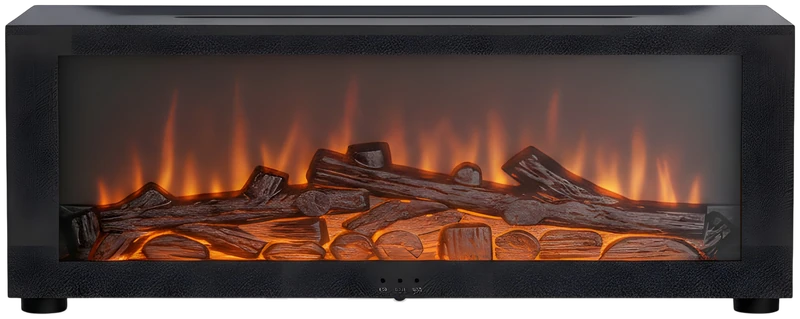
- Flame Mist light: seven glow colors, from the supplier's product listing