
A diffuser is built to carry scent; a humidifier is built to add water to the air. Ultrasonic devices do both to a degree, and the difference between them is tank size and run time rather than technology. Neither replaces a whole-home humidifier sized for dry winter air.
Questions people ask next
Is an aroma diffuser the same as a humidifier?
Mechanically, an ultrasonic one nearly is — both vibrate water into cold mist. The difference is tank size and intent: a diffuser is sized to scent a room for an hour or two, a humidifier to add water for most of a night. Neither replaces a whole-home unit.
Can I use a diffuser as a humidifier?
For one room, partly. A 200 ml tank raises humidity noticeably in a bedroom-sized space and not at all in an open-plan one. If dry air is the actual problem, buy something rated in liters.
Do I have to put oil in it?
No. Both run on plain water. The cleaning rules do not change either way — empty the tank after use and wipe it dry, because standing water is what makes these devices smell stale.
Which one is quieter?
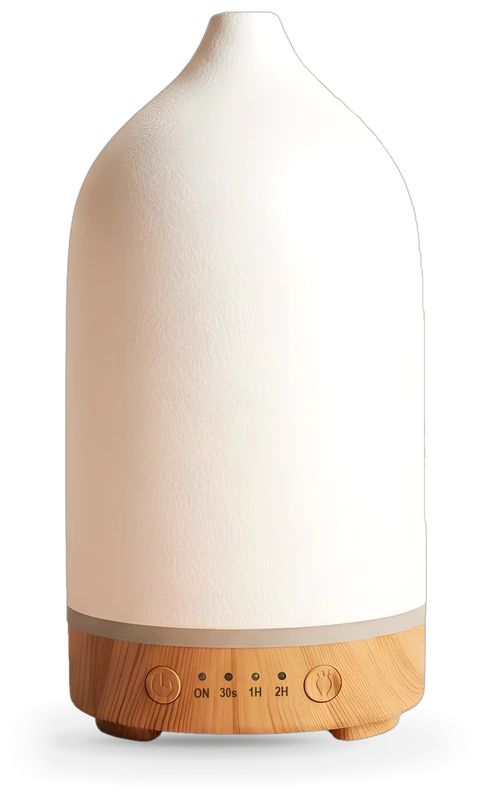
The Wood-Grain Diffuser. Neither has a fan, so both are quiet in the way ultrasonic devices are quiet. We have not put either in front of a sound meter, and we are not going to print a decibel figure we did not take.
Can either one cause mold?
A neglected one can encourage it — the risk is water left standing in the tank and over-humidifying a small room, not the device itself. Empty it after each use, and do not run a humidifier all day in a room that already feels damp.
Where these numbers come from
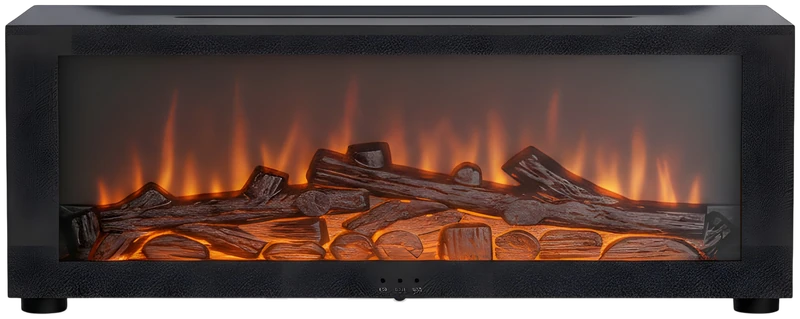
- Weralis catalogue — 200 ml tank and a timer of up to two hours on the Wood-Grain Diffuser; 150 ml tank, timer and remote on the Flame Mist
- ASPCA Animal Poison Control — active (ultrasonic and nebulising) diffusers emit droplets of oil, not scent alone
- Supplier specification sheets held for both devices, used for tank volume, timer steps and noise rather than marketing copy