
Essential oils and dogs

Are essential oils and diffusers safe around dogs?

Last reviewed

A golden retriever resting on a cream rug in a warm, quiet living room

Dogs handle essential oils better than cats, and the documented poisonings almost all come from oil applied to the skin or swallowed rather than from a diffuser. Tea tree is the classic case: a 443-case series records depression, weakness, incoordination and tremors after concentrated oil was put on the coat.

What is actually documented

The veterinary literature on dogs and essential oils is unusually clear about how the harm happens, and it is not the way most people fear.

A case series of 443 concentrated tea tree oil exposures in dogs and cats, and earlier work on melaleuca applied topically, describe the same picture: oil applied to the coat or swallowed, usually by an owner treating a skin problem, followed within hours by depression, weakness, incoordination, tremors, sometimes rear-limb paralysis and low body temperature. Recovery with supportive care typically takes two to three days.

Two details matter. Tea tree is absorbed roughly as well through the skin as by mouth, so "I only put it on his coat" is not a mitigation. And a few concentrated drops are enough — this is not a story about large quantities.

What is not documented

Routine diffusing in a ventilated room is not where these cases come from. That does not make it risk-free — the Merck Veterinary Manual and Pet Poison Helpline both treat inhaled exposure as a real category, particularly for animals with existing airway disease — but it does mean the honest ranking is:

  1. Applied to the coat or skin — the documented cause of serious poisoning. Never do this.
  2. Swallowed — a knocked-over bottle, a licked surface. Keep bottles capped and away.
  3. Inhaled from a diffuser — irritation rather than poisoning, in a ventilated room, for a healthy dog.

Dogs are not cats, and the difference is real

Cats lack an efficient version of the liver pathway that clears these compounds, which is why the cat guide is stricter. Dogs metabolize them better. That is a difference of degree, not a permission: the same oils appear on veterinary lists for both species, and a small dog in a closed room is closer to the cat situation than to a person's.

If you share a home with both, follow the cat rules. They are the tighter of the two.

The rules that keep it uneventful

  • Never apply oil to a dog, diluted or not. This single rule removes the documented cause.
  • Diffuse in a room with a door open, for a set period, not continuously. Half an hour to two hours is enough.
  • Give the dog somewhere to go. A closed room an animal cannot leave is the problem, not the device.
  • Skip it entirely if the dog has asthma, collapsing trachea, or any breathing condition. Brachycephalic breeds — pugs, bulldogs, frenchies — start with less airway to spare.
  • Keep bottles capped and off low surfaces. Ingestion is the severe case, not the smell.
  • Watch for the signs: wobbliness, weakness, drooling, vomiting, tremors, low temperature. If you see them, that is a vet call, not a wait-and-see.
  • If exposure happens, do not wash it off with anything oily. Call your vet or the ASPCA Animal Poison Control Center on (888) 426-4435.

What this means for what we sell

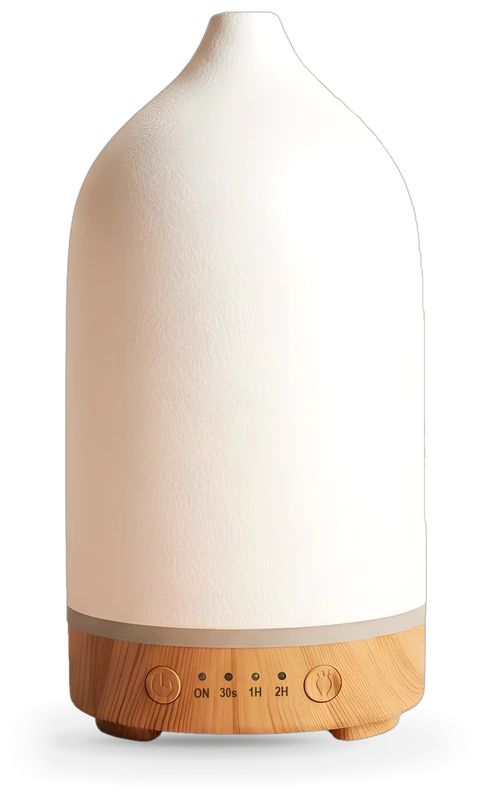
We sell the device, not the oil, so what goes into the room is your choice — and a single note makes that choice easy to check: you know exactly what is in the air. Tea tree is the note with the clearest veterinary record against it, worth knowing before you pick it for a house with a dog in it.

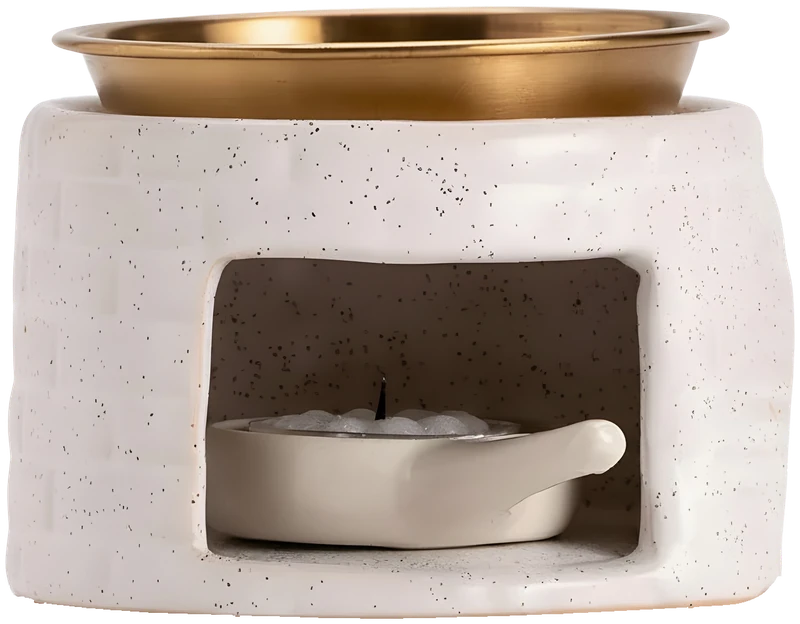
If you would rather have no aerosol at all, a tealight warmer carries no droplets into the air. It swaps that for an open flame and a dish of warm oil at nose height, which for a curious dog is its own problem.

Read next

Questions people ask next

Are essential oil diffusers safe for dogs?

For a healthy dog in a ventilated room the animal can leave, diffusing is not where documented poisonings come from — those come from oil applied to the coat or swallowed. Skip it entirely for dogs with any airway condition, and never run it in a closed room.

Which essential oils are toxic to dogs?

Tea tree has the clearest veterinary record, with a 443-case series of concentrated exposures in dogs and cats. Pennyroyal, wintergreen, pine oils and citrus also appear on veterinary lists. The route matters as much as the oil: skin and ingestion are the dangerous ones.

Can I put essential oil on my dog's coat?

No. That is the documented cause of serious poisoning, including with diluted product — tea tree is absorbed about as well through skin as by mouth. Skin problems are a vet question, not an oil question.

Is lavender safe for dogs?

Less settled than the internet suggests. It is not among the oils with documented poisoning case series in dogs, but the ASPCA's toxic plant database lists Lavandula angustifolia as toxic to dogs as well as cats, with linalool and linalyl acetate as the toxic principles. Diffuse in a ventilated room for a set period, never apply it to the dog, and stop if the dog leaves every time you switch it on.

What are the signs my dog reacted to an essential oil?

Wobbliness or an uncoordinated gait, weakness, depression, drooling, vomiting, tremors, and low body temperature. Signs typically appear within hours of exposure. Call your vet or the ASPCA Animal Poison Control Center on (888) 426-4435.

Where these numbers come from

  • Concentrated tea tree oil toxicosis in dogs and cats: 443 cases, 2002–2012 (PubMed 24344857)
  • Toxicity of melaleuca oil and related essential oils applied topically on dogs and cats (PubMed 8197716) — depression, weakness, incoordination and muscle tremors after dermal application
  • Merck Veterinary Manual — Toxicoses from essential oils in animals
  • ASPCA Toxic and Non-Toxic Plants database, Lavender (Lavandula angustifolia) — toxic to dogs, cats and horses
  • Pet Poison Helpline — tea tree oil and essential oils in dogs; ASPCA Animal Poison Control Center hotline (888) 426-4435
How we research and check these numbers