Are essential oil diffusers bad for you?

Do ultrasonic diffusers and humidifiers harm indoor air quality?

Last reviewed

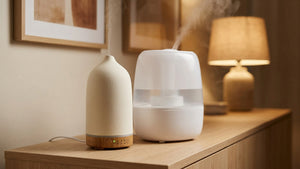
Cream wood-grain essential oil diffuser misting on an oak side table beside a linen sofa in a calm living room

The oil is rarely the problem; the water is. Ultrasonic devices aerosolize whatever is dissolved in the tank, and studies measuring tap-water fill find particulate above the EPA's PM2.5 ambient standard. Distilled water removes almost all of that. Ventilate, run in bursts, and stop if anyone in the room gets symptoms.

The risk people worry about, and the one that is measured

The usual worry is the oil. The measured problem is the water.

An ultrasonic diffuser works by vibrating liquid into a fine mist, and it is indiscriminate: everything dissolved in the tank goes into the air with it. Systematic reviews of ultrasonic humidifiers find that units filled with ordinary tap water produce steady-state particulate levels exceeding the EPA's PM2.5 ambient air standard, made of the minerals and metals that were dissolved in the water. Researchers describe this bluntly — acceptable drinking water can produce unacceptable indoor air.

Modeled deposition in the airways runs into hundreds of micrograms over an eight-hour session for an adult, and the particles are small enough to reach the deep lung.

There is also a study measuring volatile organic compounds and particulate specifically from an ultrasonic essential oil diffuser, so the oil is not weightless either. But the mineral load from tap water is the larger, better-documented effect.

The single change that fixes most of it

Use distilled water. Not filtered, not softened — distilled. It has almost nothing dissolved in it, so there is almost nothing to aerosolize. This is the one piece of advice in this whole guide that changes the numbers rather than the odds, and it costs a dollar a bottle.

If you use tap water, you are running a small mineral aerosol generator alongside your scent.

The rest of the rules, in order of how much they matter

  1. Distilled water, every fill.
  2. Empty the tank after use and wipe it dry. Standing warm water is how these devices start growing what they then aerosolize.
  3. Run in bursts, not continuously. Thirty minutes to two hours scents a room; the nose stops registering it after about twenty anyway.
  4. Ventilate. A room with a door that opens, not a sealed bedroom all night.
  5. Do not over-humidify. If windows are fogging or the room feels damp, you have gone past useful and started encouraging mold on the surfaces, not in the machine.
  6. Stop if there are symptoms. The EPA's own advice is to stop using the humidifier and speak to a doctor if respiratory symptoms track with its use.

Who should be more careful

Asthma and other respiratory conditions are the clear case: added particulate is exactly the wrong thing, and the honest recommendation is not to diffuse in a room that person sleeps in. The same goes for infants — a nursery is the wrong place for one.

Animals are a separate question with a different mechanism, covered in what to diffuse and what to skip.

What we sell, and what that means here

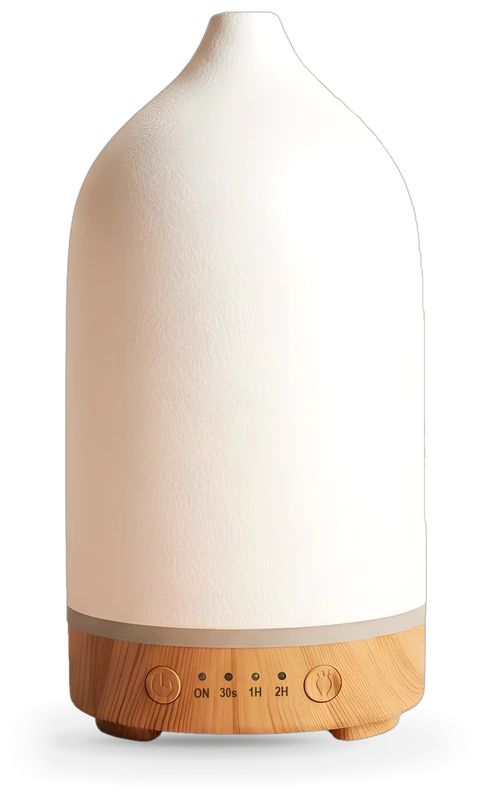
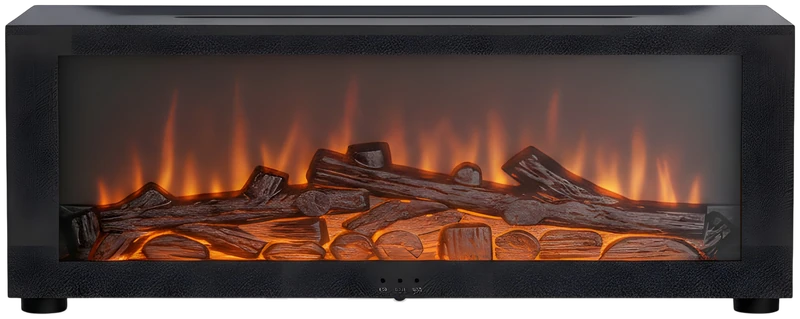
Both our devices are ultrasonic — the Wood-Grain Aroma Diffuser at 200 ml and the Flame Mist Humidifier Diffuser at 150 ml — so everything above applies to them as much as to anything else on the market. We would rather write that down than let you find it out.

If none of this appeals, the tealight warmers sidestep it entirely: they carry no water into the air at all. They trade it for an open flame, which is its own set of rules.

Questions people ask next

Are essential oil diffusers bad for your lungs?

The measured risk is mostly the water, not the oil. Ultrasonic units filled with tap water emit fine particulate above the EPA's PM2.5 ambient standard, made of dissolved minerals. Distilled water removes almost all of it. There is also research measuring VOCs and particulate from oil diffusers specifically, which is a reason to run them in bursts rather than continuously.

Should I use distilled water in a diffuser?

Yes, and it is the single most effective thing on this page. Tap water carries dissolved minerals that the device turns into airborne particles; distilled water has almost nothing to aerosolize.

Can a diffuser cause mold?

Not by itself. Two things do: water left standing in the tank, and over-humidifying a room until surfaces stay damp. Empty the tank after each use, and stop before the windows fog.

Can diffusers cause headaches?

Some people report them, usually from too much scent rather than too little ventilation. Reduce the dose to three to five drops, run it for a shorter period, and change the note — adaptation makes people pour more than they need.

Is a diffuser safe for a baby's room?

We would not put one in a nursery. Guidance is unsettled, infants breathe more air per kilogram of body weight than adults, and added particulate is the wrong direction for developing lungs.

Is a tealight warmer better for air quality?

It puts no water and no mineral aerosol into the air, so on that measure yes. It replaces the risk with an open flame and combustion from the candle itself, which has its own rules.

Where these numbers come from

  • Exposure at the indoor water–air interface: fill water constituents and consequent air emissions from ultrasonic humidifiers, systematic review (PMC9828259) — PM levels at steady state exceeding the USEPA PM2.5 ambient standard
  • An overlooked route of inhalation exposure to tap water constituents: aerosolized aqueous minerals from ultrasonic humidifiers (PMC7408721) — modelled respiratory deposition for adults and infants
  • Environmental risks from consumer products: acceptable drinking water quality can produce unacceptable indoor air quality with ultrasonic humidifier use (PubMed 36116655)
  • Volatile organic compound and particulate matter emissions from an ultrasonic essential oil diffuser (PubMed 33905580)
  • US EPA, Indoor Air Quality: Use and Care of Home Humidifiers — advice to stop use and consult a physician if respiratory symptoms track with use
How we research and check these numbers